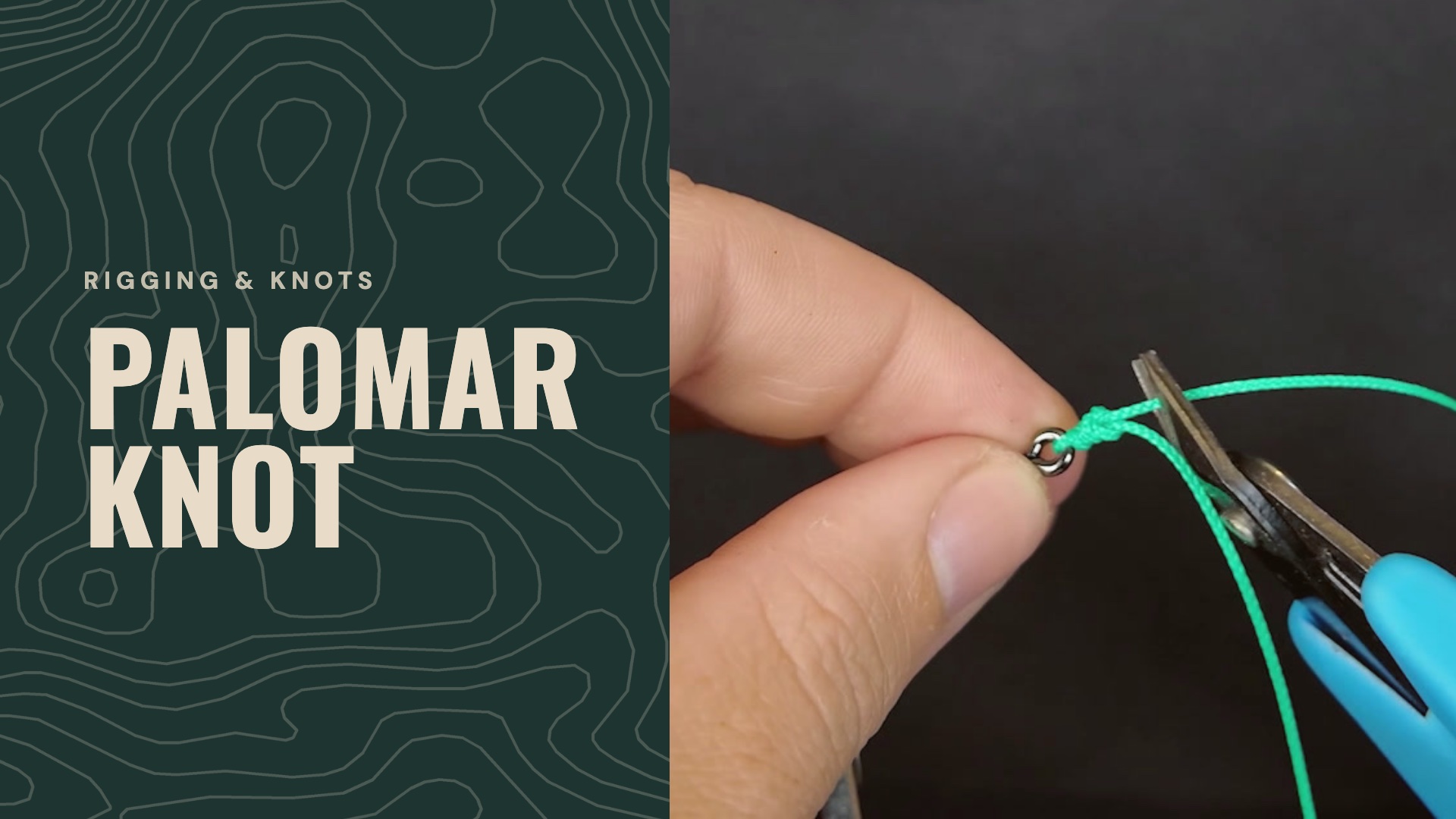
The palomar is the first knot most people learn and the one most people tie slightly wrong. It is not that the knot is hard. It is that two of the eight steps are easy to rush, and both of them are the ones holding your fish on.
Why this knot
It is strong, it is fast, and it works with braid and fluorocarbon alike. Tied properly it retains most of the line’s rated strength, which is more than can be said for a hurried clinch knot. For everything we make, this is the knot we would tie.
Where it goes wrong
Two places. The first is passing the loop over the hook: people catch it on the point, force it, and put a kink in the line before the knot is even seated. Take the extra second and walk the loop over cleanly.
The second is cinching dry. Line under friction generates heat, and heat weakens monofilament and fluorocarbon in a way you cannot see. Wet the knot every time. It costs you nothing and it is the difference between a knot that holds and a knot that lets go at the worst possible moment.
If the wraps cross when you seat it, cut it off. A knot that looks wrong is wrong.
How to know it is right
A properly seated palomar looks tidy. The wraps sit parallel against the eye, the tag end points back along the hook shank, and there is no daylight between the knot and the eye. Pull against it steadily with your hand before you cast. Better to find out now.