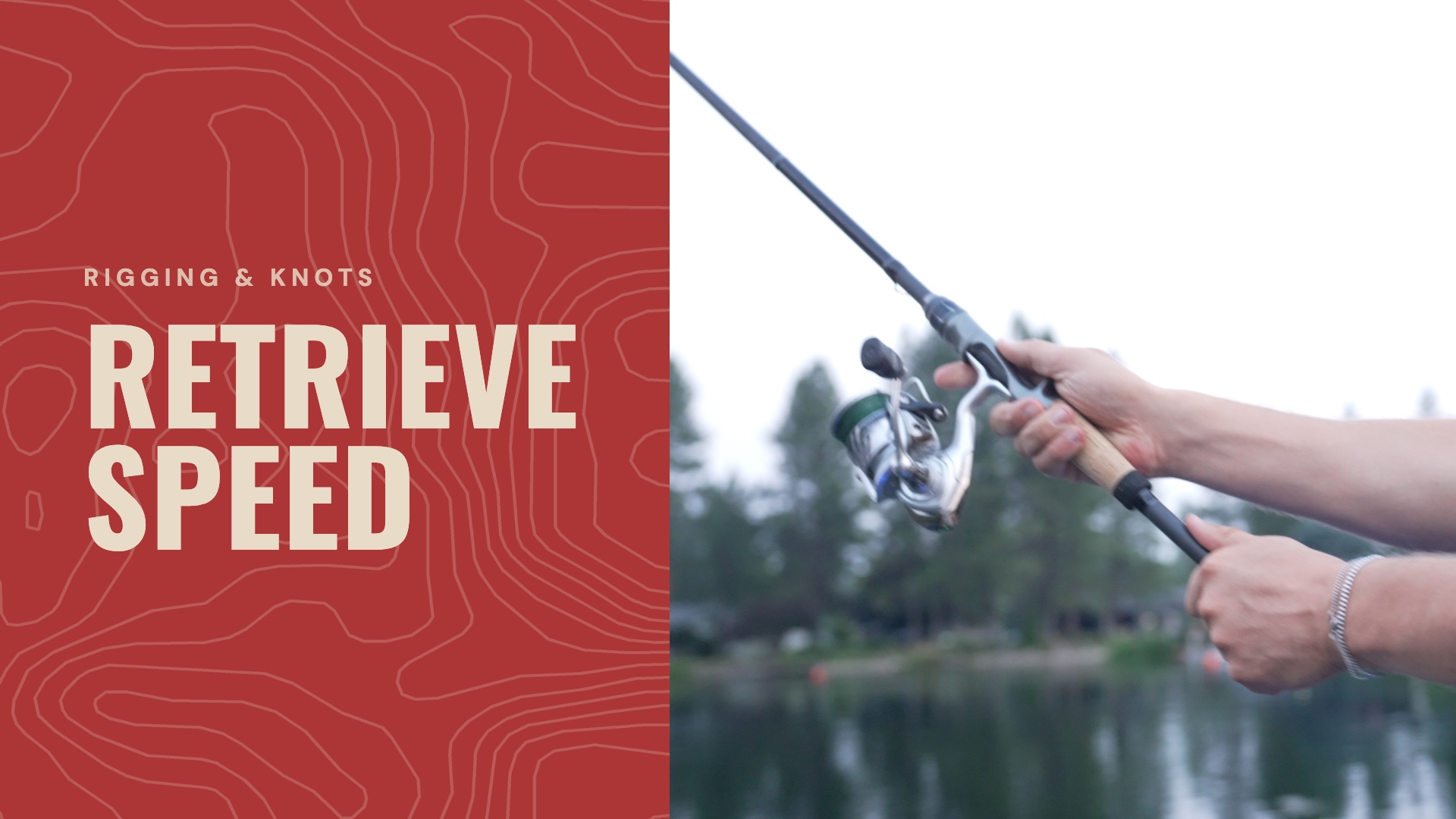
There is a speed at which a paddle-tail swimbait comes alive, and it is slower than almost everyone fishes it. Winding faster feels productive. It covers more water. It also swims the bait outside the range where its tail does the thing it was designed to do.
Find the speed by feel
Cast out and start retrieving quickly, then gradually slow down until you can feel a steady, rhythmic thump through the rod. That thump is the tail working. Hold it right there. Slow down much further and the thump disappears; speed up and it smooths out into nothing.
That window is narrower than you would expect, and it is where the bait looks like a fish.
Why slower gets bitten
A bait moving slowly gives a fish time to commit. At speed a fish has to make an instant decision, and the default answer is no. It also keeps the bait in the strike zone longer per cast, which is the same argument as everywhere else on this site.
Let the rod tip do the varying
Once you have the base speed, add the occasional pause or a small lift of the rod tip. The bait will fall and then re-start, and that change of pace is frequently the trigger. Steady is the baseline, not the whole retrieve.