Almost every hook-size question gets answered with a fish. Bigger fish, bigger hook. That is the wrong variable. The hook has to clear the bait before it ever reaches a fish, so the bait is what sets the size.
Match the gap to the body
Lay the hook alongside the bait. The gap — the distance between the point and the shank — needs to be wider than the body of the plastic at the point where the hook exits. If the gap is narrower, the plastic fills it on the hookset and the point never gets through.
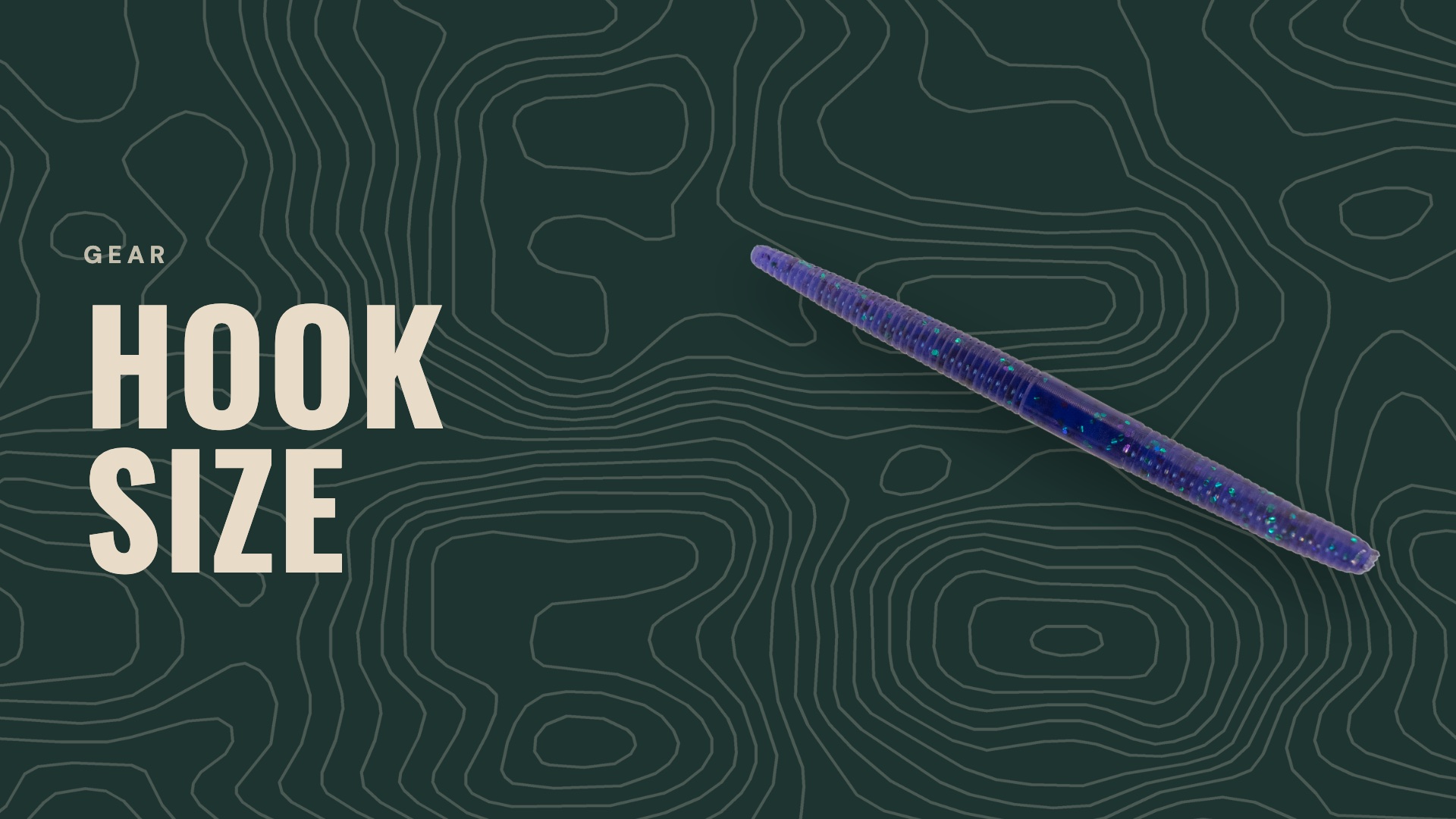
As a starting point: a 4 to 5 inch finesse worm sits nicely on a 2/0 or 3/0 EWG. A bulkier craw body wants a 3/0 or 4/0. A 5 inch fluke, with its thick shoulders, is a 4/0.
What EWG actually means
Extra wide gap. The bend is offset to leave more room between point and shank, which is precisely the clearance problem above, solved in the hook design. For thick-bodied soft plastics it is the default worth starting from.
The test
Rig the bait, then pinch it against the hook shank the way a fish would compress it in its mouth. If the point stands clear of the plastic when you squeeze, the hook is big enough. If the plastic swallows the point, go up a size. This takes five seconds and saves a day of missed fish.