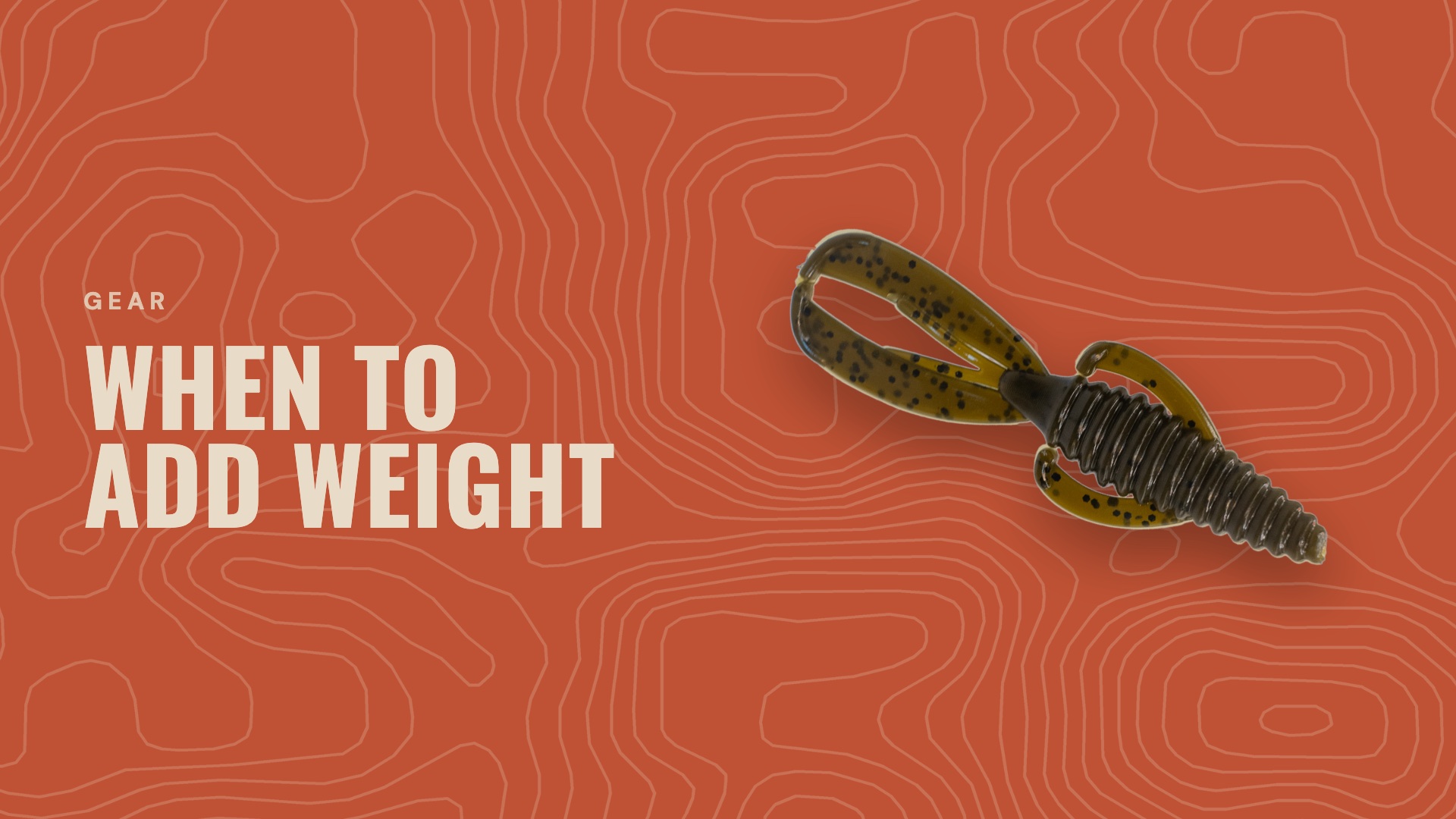
Most people size their weight by how far they need to cast. That works, and it also quietly ruins the presentation. Weight is the dial that controls how fast your bait falls and how deep it stays. Casting distance is a side effect.
Start light, add only what you need
The lightest weight that gets you to the bottom in a reasonable time is almost always the right one. A slower fall keeps the bait visible for longer and looks more like something alive. Every extra sixteenth of an ounce buys you depth and costs you fall time.
What actually forces you heavier
Three things, and none of them are fish size. Depth: more water, more weight. Wind: a bow in your line means you lose contact with the bait, and weight buys that contact back. Cover: to get through matted weed you need enough mass to punch, not drift.
A place to start
In shallow water, out of the wind, an eighth of an ounce is plenty and often too much. Ten to fifteen feet, or a light chop, and three sixteenths to a quarter is the working range. Deeper, windier, or punching cover, three eighths and up.
Change one variable at a time. If you are not getting bit, try lighter before you try heavier — the instinct runs the wrong way.